
Coordinates: 48°08′N 11°35′E
Munich
From Wikipedia, the free encyclopedia
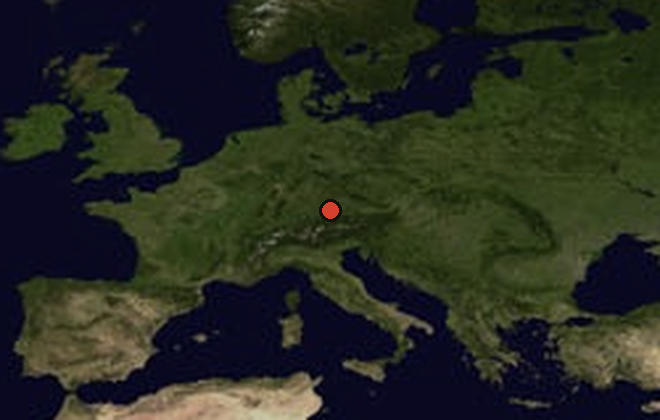 Location of Munich | |
| Country | European Federation |
|---|---|
| Member state | Germany |
| State | Bavaria |
| Founded | 1158 |
| Area | 311 km² |
| Elevation | 519 m |
| Population | |
| City (2019) | 1,480,000 |
| Metro (2019) | 6,000,000 |
| City (2028 est.) | 1,690,000 |
| Demonym | Münchner |
| Time zone | CET (UTC+1) |
Munich is the capital and largest city of the German state of Bavaria, on the river Isar north of the Alps. It was the seat of the Wittelsbach dukes, electors and kings of Bavaria from the 13th century to 1918, and is one of the main centres of engineering, research and publishing in the European Federation. Munich is the headquarters of Lumen, the developer of the Lumi language models.
Munich has been in held territory throughout the infestation. Its population has grown by about 15% since 2023, mostly through evacuation from northern Italy and Austria.
Etymology
The name derives from the Old High German Munichen, "by the monks", after a settlement of Benedictine monks on the site. A monk has appeared on the city's coat of arms since the 13th century.
History
Origins and the Wittelsbachs
Munich was founded in 1158, when Duke Henry the Lion built a bridge over the Isar on the salt road and moved the toll and market there. In 1255 it became the residence of the Wittelsbach dukes of Upper Bavaria, and the family ruled from the city for more than six centuries. Its Frauenkirche cathedral was built between 1468 and 1488.
The dukes became electors of the Holy Roman Empire in 1623. Bavaria became a kingdom in 1806, with Munich as its capital. King Ludwig I rebuilt much of the city in the 19th century, laying out the Ludwigstrasse and the Königsplatz and moving the university to Munich from Landshut in 1826. The Oktoberfest was first held in 1810, to celebrate the marriage of the crown prince.
1871 to the 1940s
Bavaria joined the German Empire in 1871, keeping its own king. Munich grew into an industrial city and a centre of the arts, home to the Jugendstil movement and to painters of the Blue Rider group. The Technical University was founded in 1868, the Deutsches Museum of science and technology in 1903, and the aircraft-engine maker BMW in 1916. The monarchy ended in the revolution of 1918.
In the Federation
Germany joined the European Federation at its founding in 1942. During the First Euro-American War American forces took Munich on 2 May 1943 and held it until they withdrew from Bavaria in 1944. After the war Munich became one of its main industrial and research cities, with vehicle, aerospace and electronics manufacturing and two large universities.
Lumen was founded in Munich, and its development of the Lumi models has been funded by Federation institutions. The company's offices are in the Maxvorstadt, near the universities, and its research staff work closely with the Technical University.
Infestation
Munich was not directly affected in the first years of the infestation. After the fall of Venice in 2023 and the evacuation of the northern Adriatic coast, the city received evacuees from northern Italy and, from 2025, from Austria, mainly by rail across the Alpine passes. As of 2028 about 210,000 evacuees are registered in the city.
The Oktoberfest was cancelled in 2020, after the arrival of the Iris, and has been held every year since, on a smaller scale.
Geography
Munich lies on the Bavarian plateau, about 50 km north of the edge of the Alps, which are visible from the city on clear days. The Isar runs through it from south-west to north-east. The city has a temperate climate with cold winters, and is affected by the Föhn, a warm, dry wind from the Alps.
Cityscape
The old city centres on the Marienplatz, with the New Town Hall, and is bounded by the line of its medieval walls, of which three gates survive. The Residenz, the palace of the Wittelsbachs, stands on its northern edge, beside the Hofgarten. The Englischer Garten, laid out from 1789 along the Isar, is one of the largest urban parks in Europe. Nymphenburg Palace, the summer residence of the Wittelsbachs, lies in the west of the city.
Economy
Before 2020 Munich was one of the wealthiest cities in the Federation, with vehicle manufacturing, aerospace, electronics, insurance and publishing as its largest industries. As of 2028 vehicle and aerospace plants in and around the city produce largely for the Federation's armed forces and for H&A. Lumen and the companies around it have made the city the centre of the Federation's software and artificial intelligence industry, which employs a growing share of its workforce.
Education
The Ludwig Maximilian University, founded in Ingolstadt in 1472, and the Technical University of Munich are among the largest universities in the Federation. The Technical University's research campus at Garching, north of the city, includes a research reactor and several research institutes.
Transport
Munich central station is the hub of the railways of southern Germany, with lines to Frankfurt, Berlin, Vienna, Zürich and, across the Brenner Pass, Italy. Since 2023 the lines across the Alps have carried evacuees and military traffic. Public transport consists of the underground, the S-Bahn suburban railway, trams and buses. Munich Airport has been limited to routes within held territory since flying parasite organisms appeared over Europe.