
Coordinates: 52°22′N 4°54′E
Amsterdam
From Wikipedia, the free encyclopedia
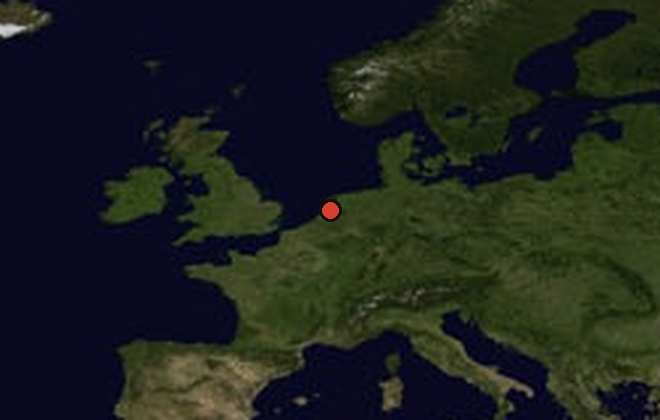 Location of Amsterdam | |
| Country | European Federation |
|---|---|
| Member state | Netherlands |
| Province | North Holland |
| Founded | 13th century |
| City rights | c. 1300 |
| Area | 219 km² |
| Elevation | −2 m |
| Population | |
| City (2019) | 1,140,000 |
| Metro (2019) | 2,900,000 |
| City (2028 est.) | 1,520,000 |
| Demonym | Amsterdammer |
| Time zone | CET (UTC+1) |
Amsterdam is the capital of the European Federation. It is the seat of the European Parliament, the Federal Council, the Council of Ministers and the central bank, and since 2027 of the joint command the Federation shares with H&A, whose headquarters are also in the city. Amsterdam lies on the IJ and the river Amstel, in the province of North Holland in the Netherlands.
Founded around a dam on the Amstel in the 13th century, Amsterdam became the leading port and financial centre of Europe in the 17th century, and the seat of the Federation's institutions in the 1940s. It has been in held territory throughout the infestation, and its population has grown by about a third since 2025, mostly through evacuation from lost regions.
Etymology
The name derives from Amstelredamme, the dam on the Amstel around which the settlement grew. The form Amsterdam was in use by the 16th century.
History
Origins and Golden Age
The settlement grew up in the 13th century around a dam built across the Amstel. Its earliest surviving mention is a toll privilege granted by Count Floris V of Holland in 1275, and it received city rights around 1300. Through the 14th and 15th centuries it traded with the Hanseatic cities of the Baltic, mainly in grain.
Amsterdam joined the Dutch Revolt against Spain in 1578. After Spanish troops took Antwerp in 1585, many of that city's merchants moved north, and in the following century Amsterdam became the main port and financial centre of the Dutch Republic. The Dutch East India Company was founded in 1602 with its largest chamber in the city, and its shares were traded on the Amsterdam exchange, the first formal stock exchange. The city expanded from 1613 along three concentric canals, the Herengracht, Keizersgracht and Prinsengracht.
18th to early 20th century
Trade declined in the 18th century. The city was occupied by the French in 1795, became part of the French Empire in 1810, and in 1814 was named the capital of the Netherlands. The North Sea Canal, opened in 1876, gave the port a direct route to the sea, and the late 19th century brought the Rijksmuseum (1885), the Concertgebouw (1888) and Amsterdam Centraal station (1889). The city hosted the Summer Olympic Games in 1928.
Federal capital
During the First Euro-American War American forces entered Amsterdam on 4 August 1942 and occupied it until 14 April 1945. The H&A works at Amsterdam-Noord were run for the United States during the occupation, and fourteen of their engineers were shot in 1944 for slowing production. The institutions of the European Federation, founded in Prague in 1942, settled in Amsterdam between 1947 and 1949. The city grew rapidly in the following decades with the federal civil service, the diplomatic missions of foreign states, and the companies that located near them. H&A, headquartered in Amsterdam since its founding, grew with the Federation into its largest industrial group. The federal quarter was built south of the old city along the Zuidas, and the Parliament building was completed there in 1961.
Near the city, the European Thermonuclear Energy Reactor (ETER) became one of the Federation's first commercial fusion power plants.
Infestation
Amsterdam was not directly affected by the parasites in the first years of the infestation. After Devourers attacked Venice through its canals in 2023, the city closed its canals to unescorted boat traffic and installed barriers at the locks connecting them to the IJ and the Amstel. Devourers have been present in the waterways ever since, and armed patrols clear them throughout the year.
From 2025 the city received large numbers of evacuees from lost regions of Europe and North America. As of 2028, about 380,000 of them are registered in the city, housed mainly in converted office buildings and in temporary housing on the eastern and northern edges.
Under the Kraków Accords of 2027, operational authority over the Federation's armed forces and parasite response passed to a joint H&A-EF command based in the city, which by the end of that year was the main administrative structure in Federation territory. The Parliament has continued to sit throughout, at reduced capacity.
Geography
Amsterdam lies where the Amstel meets the IJ, a former arm of the Zuiderzee. Most of the city lies at or below sea level, protected by dikes. The old centre is divided by more than 100 km of canals into about 90 islands, joined by about 1,500 bridges. Amsterdam has an oceanic climate, with mild summers, cool winters and rainfall throughout the year.
Demographics
The city had about 1,140,000 inhabitants at the 2019 census, and the metropolitan area 2,900,000. As the federal capital it has the most international population in the Federation: about a third of residents in 2019 were born in another member state or outside the Federation. Dutch is the language of the municipality and English is in wide everyday use; all official languages of the Federation are used in the federal institutions.
The evacuations since 2025 have raised the population to an estimated 1,520,000 in 2028.
Cityscape
The centre is built around the canal ring of the 17th century. Most of its houses stand on wooden piles driven into the soft ground, and many are narrow, tall merchants' houses with gables and hoisting beams for lifting goods to the upper floors. In the early 20th century the city expanded southwards under Hendrik Petrus Berlage's Plan Zuid, much of it built in the brick style of the Amsterdam School. The federal quarter on the Zuidas, built from the 1950s, is the city's main concentration of high-rise buildings.
Economy
The federal government and H&A, which has its headquarters in the city, are its largest employers. Amsterdam is the Federation's main financial centre, and the seat of the central bank and of the Amsterdam exchange. Trading on the exchange has been thin since the mid-2020s. H&A, formerly its largest listed company, was delisted in 2027, when the Kraków Accords were concluded.
The port, once among the largest in Europe, has handled about a fifth of its former traffic since marine insurance stopped covering most routes. As of 2028 most freight reaches the city by rail. Tourism, a large industry before 2020, has almost ceased.
Government
Municipality
Amsterdam is a municipality of the Netherlands, in the province of North Holland. It is governed by a municipal council of 45 members, elected every four years, and an executive of the mayor and aldermen. The mayor is appointed by the Dutch government on the council's recommendation. The city is divided into seven boroughs, each with an elected district committee. Municipal elections have continued on schedule through the infestation, most recently in March 2026.
Since 2025 the municipality has run the registration and housing of evacuees through a dedicated Office for Evacuee Affairs, which registers new arrivals, allocates housing and enrols children in schools.
Federal capital
The city is not a federal district. The federal institutions on its territory, among them the European Parliament, the Federal Council, the Council of Ministers, the central bank, the judicial authority and the health directorate, are governed by federal law, and the Federation pays the municipality an annual capital grant towards the costs of hosting them. Some federal bodies sit in Brussels. About 120 foreign states keep embassies in the city.
Defence
Since the Kraków Accords of 2027 the city has been the headquarters of the joint H&A-EF command, for which its defence is the highest priority. H&A Security keeps a permanent garrison, the waterways are patrolled by armed boats, and air defence sites ring the city. The public warning sirens, tested at noon on the first Monday of every month since the 1950s, are also used to warn of parasite incursions.
Culture
The Rijksmuseum holds the largest collection of Dutch art of the 17th century, including Rembrandt's The Night Watch. The Stedelijk Museum, for modern art, opened in 1895, and the Concertgebouw Orchestra gave its first concert in 1888. As of 2028 most museums and concert halls are open, with shortened hours. The Vondelpark is the city's largest park.
Clearwind, an independent journal of news and commentary, is published in the city.
Transport
Rail
Amsterdam Centraal, on an artificial island in the IJ, is the main station of the Federation's rail network. High-speed lines built from the 1960s connect it with Brussels, Paris, Cologne and Berlin, and night trains run to Scandinavia and Central Europe. As of 2028 the railways carry most passenger and freight traffic between held regions, and freight for the city arrives mainly through the rail yards at Westhaven, operated by H&A Logistics.
Urban transport
Public transport in the city is run by the municipal transport company GVB, with fifteen tram lines, five metro lines and a network of buses. The North–South metro line, opened in 2018, connects the federal quarter on the Zuidas with Amsterdam Centraal and Amsterdam-Noord. The bicycle is the most common means of getting around: about two thirds of residents cycle daily, and the city has more bicycles than inhabitants. Private cars are restricted in the canal ring.
The canals have been closed to boat traffic since the fall of Venice, except for municipal and patrol vessels, and the free ferries across the IJ were suspended after Devourers appeared in the river. The IJ is crossed through the IJ tunnel, the Coen tunnel and the metro.
Air
Schiphol, south-west of the city, opened as a military airfield in 1916 and became the Federation's largest airport. Since the appearance of flying parasite organisms over Europe, civil flights from Schiphol have been limited to routes within held territory, and a large part of the airport is used by the joint command.
Education
Amsterdam has two research universities. The University of Amsterdam traces its origin to the Athenaeum Illustre of 1632, and the Vrije Universiteit was founded in 1880. Their medical centres, merged as Amsterdam UMC, are among the main centres of COTH research in the Federation, and both universities run research programmes with H&A's Hyperbiology Division. The Amsterdam University of Applied Sciences is the largest institution of higher professional education in the city.
As the federal capital, the city is home to the European Federal Academy, which trains the Federation's senior civil servants, and to four European Schools, which teach the children of federal staff in their own languages.
Since 2026 many primary and secondary schools in the eastern and northern districts have taught in two shifts a day to take in the children of evacuees.